How Awesome Oscillator Predictions Help You Read overbought and oversold conditions on 15 minute Charts — edition 2 — edition 3 — edition 4 — edition 5 — edition 6 — edition 7 — edition 8 — edition 9 — edition 10 — edition 11 — edition 12 — edition 13 — edition 14 — edition 15 — edition 16 — edition 17 — edition 18 — edition 19 — edition 20 — edition 21 — edition 22 — edition 23 — edition 24 — edition 25 — edition 26 — edition 27 — edition 28 — edition 29 — edition 30 — edition 31 — edition 32 — edition 33 — edition 34 — edition 35 — edition 36 — edition 37 — edition 38 — edition 39 — edition 40 — edition 41 — edition 42 — edition 43 — edition 44 — edition 45 — edition 46 — edition 47 — edition 48 — edition 49 — edition 50 — edition 51 — edition 52 — edition 53 — edition 54 — edition 55 — edition 56 — edition 57 — edition 58 — edition 59 — edition 60 — edition 61 — edition 62 — edition 63 — edition 64 — edition 65 — edition 66 — edition 67 — edition 68 — edition 69 — edition 70 — edition 71 — edition 72 — edition 73 — edition 74 — edition 75 — edition 76 — edition 77 — edition 78 — edition 79 — edition 80 — edition 81 — edition 82 — edition 83 — edition 84 — edition 85 — edition 86 — edition 87 — edition 88 — edition 89 — edition 90 — edition 91 — edition 92 — edition 93 — edition 94 — edition 95 — edition 96 — edition 97 — edition 98 — edition 99 — edition 100 — edition 101 — edition 102 — edition 103 — edition 104 — edition 105 — edition 106 — edition 107 — edition 108 — edition 109 — edition 110 — edition 111 — edition 112 — edition 113 — edition 114 — edition 115 — edition 116 — edition 117 — edition 118 — edition 119 — edition 120 — edition 121 — edition 122 — edition 123 — edition 124 — edition 125 — edition 126 — edition 127 — edition 128 — edition 129 — edition 130 — edition 131 — edition 132 — edition 133 — edition 134 — edition 135 — edition 136 — edition 137 — edition 138 — edition 139 — edition 140 — edition 141 — edition 142 — edition 143 — edition 144 — edition 145 — edition 146 — edition 147 — edition 148 — edition 149 — edition 150 — edition 151 — edition 152 — edition 153 — edition 154 — edition 155 — edition 156 — edition 157 — edition 158 — edition 159 — edition 160 — edition 161 — edition 162 — edition 163 — edition 164 — edition 165 — edition 166 — edition 167 — edition 168 — edition 169 — edition 170 — edition 171 — edition 172 — edition 173 — edition 174 — edition 175 — edition 176 — edition 177 — edition 178 — edition 179 — edition 180 — edition 181 — edition 182 — edition 183 — edition 184 — edition 185 — edition 186 — edition 187 — edition 188 — edition 189 — edition 190 — edition 191 — edition 192 — edition 193 — edition 194 — edition 195 — edition 196 — edition 197 — edition 198 — edition 199 — edition 200 — edition 201 — edition 202 — edition 203 — edition 204 — edition 205 — edition 206 — edition 207 — edition 208 — edition 209 — edition 210 — edition 211 — edition 212 — edition 213 — edition 214 — edition 215 — edition 216 — edition 217 — edition 218 — edition 219 — edition 220 — edition 221 — edition 222 — edition 223 — edition 224 — edition 225 — edition 226 — edition 227 — edition 228 — edition 229 — edition 230 — edition 231 — edition 232 — edition 233 — edition 234 — edition 235 — edition 236 — edition 237 — edition 238 — edition 239 — edition 240 — edition 241 — edition 242 — edition 243 — edition 244 — edition 245 — edition 246 — edition 247 — edition 248 — edition 249 — edition 250 — edition 251 — edition 252 — edition 253 — edition 254 — edition 255 — edition 256 — edition 257 — edition 258 — edition 259 — edition 260 — edition 261 — edition 262 — edition 263 — edition 264 — edition 265 — edition 266 — edition 267 — edition 268 — edition 269 — edition 270 — edition 271 — edition 272 — edition 273 — edition 274 — edition 275 — edition 276 — edition 277 — edition 278 — edition 279 — edition 280 — edition 281 — edition 282 — edition 283 — edition 284 — edition 285 — edition 286 — edition 287 — edition 288 — edition 289 — edition 290 — edition 291 — edition 292 — edition 293 — edition 294 — edition 295 — edition 296 — edition 297 — edition 298 — edition 299 — edition 300 — edition 301 — edition 302 — edition 303 — edition 304 — edition 305 — edition 306 — edition 307 — edition 308 — edition 309 — edition 310 — edition 311 — edition 312 — edition 313 — edition 314 — edition 315 — edition 316 — edition 317 — edition 318 — edition 319 — edition 320 — edition 321 — edition 322 — edition 323 — edition 324 — edition 325 — edition 326 — edition 327 — edition 328 — edition 329 — edition 330 — edition 331 — edition 332 — edition 333 — edition 334 — edition 335 — edition 336 — edition 337 — edition 338 — edition 339 — edition 340 — edition 341 — edition 342 — edition 343 — edition 344 — edition 345 — edition 346 — edition 347 — edition 348 — edition 349 — edition 350 — edition 351 — edition 352 — edition 353 — edition 354 — edition 355 — edition 356 — edition 357 — edition 358 — edition 359 — edition 360 — edition 361 — edition 362 — edition 363 — edition 364 — edition 365 — edition 366 — edition 367 — edition 368 — edition 369 — edition 370 — edition 371 — edition 372 — edition 373 — edition 374 — edition 375 — edition 376 — edition 377 — edition 378 — edition 379 — edition 380 — edition 381 — edition 382 — edition 383 — edition 384 — edition 385 — edition 386 — edition 387 — edition 388 — edition 389 — edition 390 — edition 391 — edition 392 — edition 393 — edition 394 — edition 395 — edition 396 — edition 397 — edition 398 — edition 399 — edition 400 — edition 401
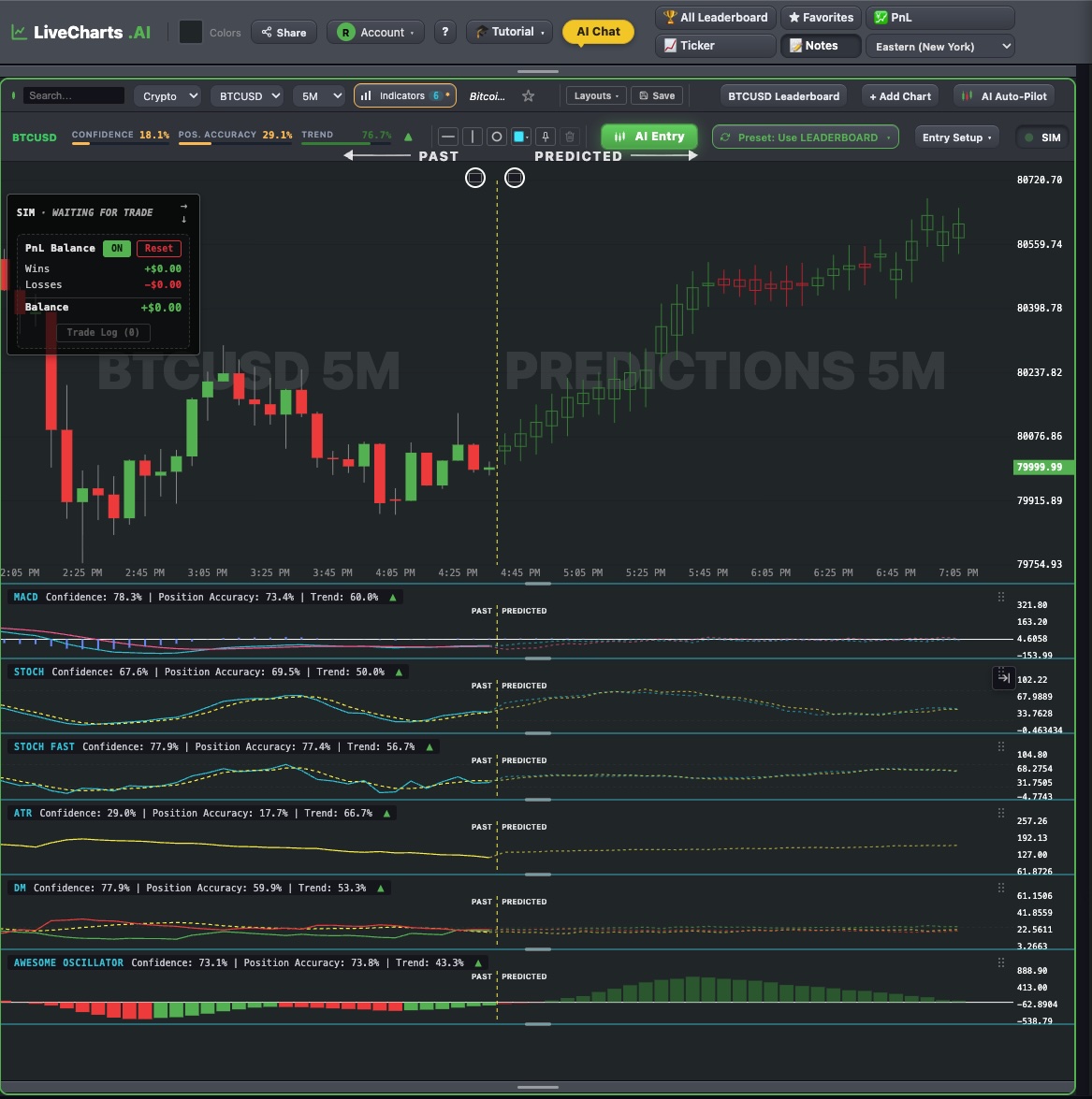
Technical analysis has always been about looking backward and trying to infer what comes next. LiveCharts.AI flips that approach: instead of only plotting what has already happened, it projects the next 30 bars forward for price and every indicator you have enabled. On a 15 minute chart, that forward projection of Awesome Oscillator gives you a working view of overbought and oversold conditions before the signals fully print. This guide walks through how traders use those forward reads in crypto to build entries with more context and, importantly, to stay disciplined when the market moves against them.
For DOGEUSD traders, one of the hardest parts of a 15 minute timeframe is deciding whether momentum is actually building or whether the move is already exhausted. A predicted Awesome Oscillator reading helps with exactly this. Rather than waiting for a crossover to appear on historical data, you can watch where the indicator is projected to go over the coming bars and compare that against the current trend structure. That comparison is the heart of overbought and oversold conditions, and it is where LiveCharts.AI adds information a conventional chart does not show.
Consider how Awesome Oscillator behaves across a 15 minute session. Price moves in waves, and indicators tend to respond to those waves with a lag. When you can see the predicted path of Awesome Oscillator thirty bars ahead, you are effectively removing part of that lag from your decision loop. You are not guessing that overbought and oversold conditions might develop — you are looking at a forward projection and judging whether it aligns with your read of the market. That alignment, or divergence from it, is a practical edge for timing 15 minute entries.
Here is how to apply this in practice on a 15 minute chart of DOGEUSD. First, set up your chart with the indicator panels you care about. LiveCharts.AI will place a dashed PAST | PREDICTED divider on each panel; everything to the right of the divider is the forward projection, not history. Watch whether the predictions for Awesome Oscillator point toward overbought and oversold conditions. If the projection lines up with your directional bias, that is supporting evidence. If it contradicts your bias, that is a reason to pause rather than force a trade. This keeps the emphasis on information, not ego.
The 15 minute timeframe rewards attention to overbought and oversold conditions because moves complete quickly and reversals can be sharp. A single candle can erase a large portion of a day's range. Using predicted Awesome Oscillator signals helps you anticipate those shifts instead of reacting after price has already moved. That is not a guarantee of outcome — nothing in trading is — but it is a genuine step toward making entries with more foresight and less guesswork.
Many traders make the mistake of treating a single indicator in isolation. The stronger approach is to combine Awesome Oscillator predictions with the other panels LiveCharts.AI projects forward — including Stochastics, ATR, ADX, and the Awesome Oscillator. When several forward readings point in the same direction on a 15 minute chart, the confluence is more meaningful than any single signal. That multi indicator view is available for DOGEUSD and every other instrument in the picker, and it updates continuously as new market data arrives.
For swing traders working a 15 minute plan on DOGEUSD, the trade simulator inside LiveCharts.AI is a useful companion to overbought and oversold conditions. You can lay out an entry with a stop and a target, and the simulator tracks it with real contract economics — without risking a single dollar. Over time, this practice reveals which 15 minute setups and which predicted Awesome Oscillator signals work for your style. The point is repetition, review, and refinement, not blind trust in any prediction.
The Web experience is built around the same forward predictions, in a layout that suits the device itself — in your browser you can open several charts at once with no installation required. Whether you set up your workspace on Web or check it on another screen, the multi timeframe and multi instrument view of DOGEUSD stays consistent, so a 15 minute read on your phone or tablet matches what you see at your desk.
If you want to see this for yourself, open a free trial at https://livecharts.ai. You can pull up a 15 minute chart of DOGEUSD, enable the Awesome Oscillator panel, and watch the forward projection build in real time. Then use the live trend leaderboard to see which instruments and timeframes are ranked with the highest confidence. The combination of forward price, forward indicators, and plain English AI chat on the chart is what makes LiveCharts.AI a different kind of trading workspace.
A final word on risk. Paying attention to overbought and oversold conditions gives you context, and predicted indicators give you information, but neither removes the inherent risk of trading. Set stops before you enter, size positions you can comfortably afford to lose, and treat every 15 minute decision as one you can review later in the simulator. Information is the goal; discipline is the guardrail.
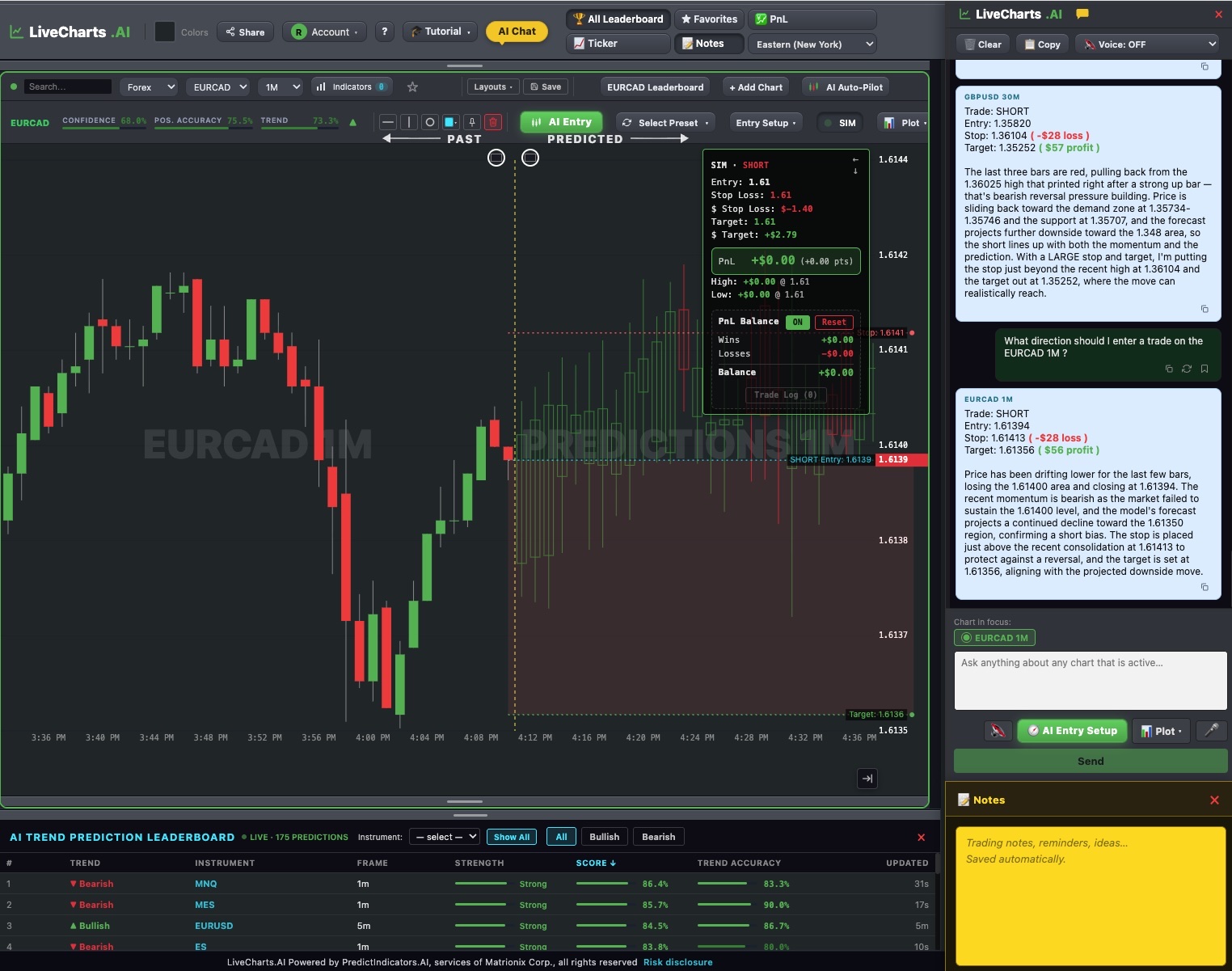
Awesome Oscillator predictions on a 15 minute chart of DOGEUSD are available inside LiveCharts.AI on Web — see the market before it happens.
See live predictions on LiveCharts.AI →LiveCharts.AI disclaimer: trading involves risk of substantial loss and is not suitable for every investor. LiveCharts.AI provides technical analysis tools and predictions for educational and informational purposes only; outcomes vary and individual results may differ from any examples shown. Historical performance is not indicative of future outcomes. Only invest capital you can afford to lose and consult a licensed financial advisor before making investment decisions.